Getting Records Out of an Active War Zone: What Ukrainian Archive Retrieval Actually Involves
Zack, from European Roots Consulting.
Scope: This is my personal preparation account. Filing an application is not a grant of citizenship. Individual experiences and costs are not universal rules or guaranteed results.
My great-grandfather on my father's side was born in a village that's part of Ukraine today. My great-grandfather on my mother's side was Romanian. So how did I discover, a full year after successfully filing for Romanian citizenship, that I was also eligible for Polish citizenship by descent, through that same Ukrainian-born great-grandfather?
An AncestryDNA test. The answer had been in front of me the whole time, and I laughed and felt frustrated with myself in the same breath, because I could have been building the Polish case at the same time as the Romanian one, which is notoriously the more complicated of the two.
Here's what happened. The DNA test surfaced a distant relative on my father's side born somewhere in Poland, not a great-grandparent or anyone close enough to make me eligible on its own. But it sent me looking, and I found the small village my great-grandfather was actually born in: Smidyn, in what's now Ukraine.
My research led to Smidyn, now in Ukraine, and records I used for my Polish application. Modern place names alone do not determine historical citizenship; I had to investigate the family’s documentary history.
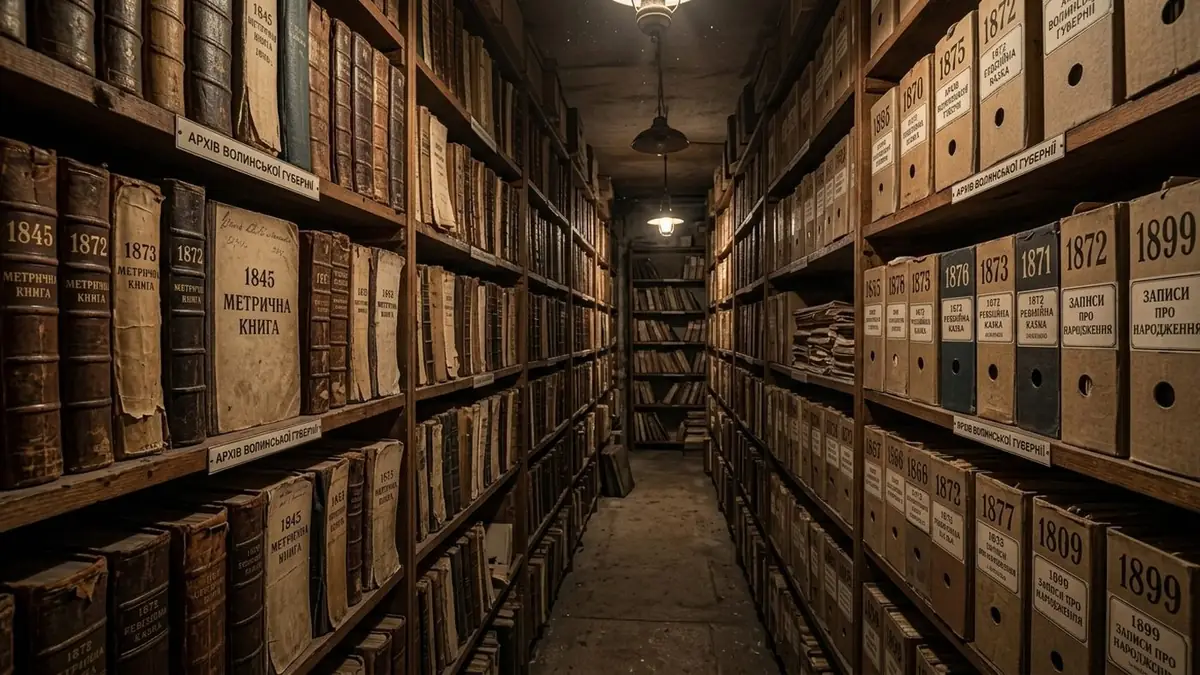
Understanding the history was the easy part. Finding the actual birth, marriage, and passport records was something else entirely, because those records now sit in an active war zone.
In my case, the relevant records were outside modern Poland. Locating a record and proving citizenship are different tasks.
This is exactly where European Roots Consulting specializes: using trusted contacts on the ground rather than wiring money abroad blindly and hoping a stranger follows through on a job you've already paid for.
I went through this myself so that a client doesn't have to. I connected with a local contact on the ground in Ukraine who specializes in genealogy and archive research. The obvious problem: Ukraine is an active war zone. I had to trust someone I'd never met with real money and hope the work got done. Then, once the records were located, getting them out of a war-torn country was arguably the harder half of the job.
It worked. From start to finish, it took a few months to locate the birth, marriage, and passport records I needed for a submitted Polish citizenship application, get digital copies made, have them apostilled, and ship them out of the country with a tracking number, first to me in the United States, and eventually to the Polish consulate.
This is the exact point where a lot of people with a legitimate claim give up, because the archive problem feels unsolvable. It isn't. It just requires knowing how to find and vet the right help on the ground, which is precisely what the Done-For-You service exists to handle.
If Ukrainian, Volhynian, or other Eastern European roots are part of your family history and you're not sure whether they connect to a real citizenship claim, the 2-minute eligibility quiz is the place to start. And if you're curious how a similarly complicated case plays out end to end, A Lawyer Quoted Me $5,000 Per Person for Romanian Citizenship. I Did It Myself Instead. is worth a read too.
Keep Reading
- Polish citizenship by descent: how to budget
- Polish and Romanian citizenship document checklist
- Polish Citizenship by Descent for Canadians
- Three Things Were Going Wrong at Once When I Almost Gave Up on My Polish Application
- Prepare readable documents for consular uploads