Three Things Were Going Wrong at Once When I Almost Gave Up on My Polish Application
Zack, from European Roots Consulting.
Scope: This is my personal preparation account. Filing an application is not a grant of citizenship. Individual experiences and costs are not universal rules or guaranteed results.
There was a marriage certificate I needed for my Polish citizenship application, and I had almost nothing to go on.
A Marriage I Couldn't Place
The person who would have known the details, my grandmother, was ailing and couldn't remember them. There were no photos of the wedding. No family records of it at all. I knew the marriage happened somewhere in Canada, and that was roughly the extent of it. Try requesting a vital record from a country when you can't tell them which province to look in. That's not a form you fill out. That's a search.
Then a Birth Certificate That Didn't Actually Exist Yet
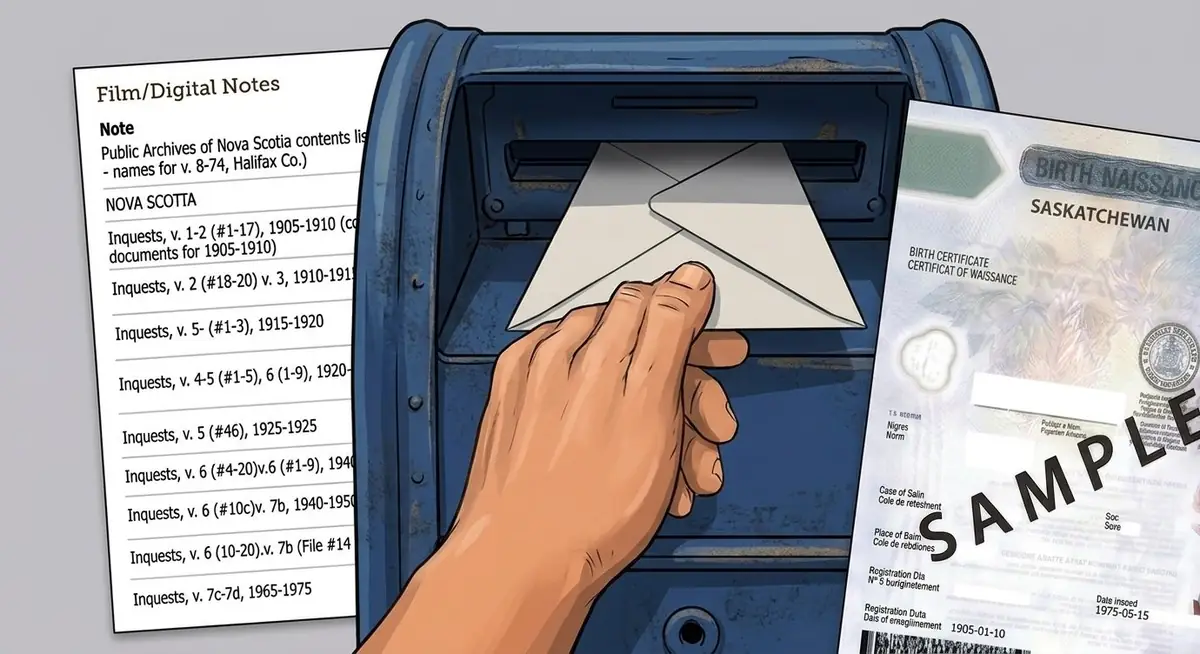
While that search was going nowhere, a second problem surfaced. My grandmother's birth certificate, another document the application needed, turned out not to exist in the way I assumed it did. She was born on a farm in Saskatchewan, and her birth had to be formally registered with the province before a certificate could even be issued. I'd budgeted for "order a birth certificate." What I actually had was a registration process standing in front of the document standing in front of the application.
And a Name That Didn't Agree With Itself
And underneath both of those, the name problem. My great-grandfather's records didn't agree with each other. The spelling on the documents from the old country didn't match his Canadian naturalization papers, which didn't quite match the name my family actually used, which didn't match the passenger manifest I'd found earlier and had been quietly treating as my anchor. A Ukrainian spelling, a Polish spelling, a Canadian spelling, all describing the same man, feeding an application process that runs on documents agreeing with each other.
So that was my desk. A marriage I couldn't place, a birth that legally hadn't been registered yet, and an ancestor whose name changed depending on which country's paperwork I was holding.
I want to be honest about what that stretch felt like, because nobody was honest with me about it. It didn't feel like a process with a next step. It felt like evidence I was doing something wrong. Like people who actually knew what they were doing didn't end up here.
The Low Point: Wiring Money Into a War Zone on the Strength of an Email
Then came the heaviest piece. Some of the documents I needed only existed, if they existed at all, in a regional archive in Ukraine. An archive that doesn't accept payment from abroad. In a country at war. The only realistic path was hiring a genealogist on the ground, a stranger I'd never met, and wiring him real money on the strength of an email thread. I remember hovering over that transfer. Not because the amount would ruin me, but because of everything it sat on top of: I still couldn't place the marriage, the birth registration was still in progress, I still didn't know which version of my great-grandfather's name would hold up, and now I was sending money into a war zone hoping a person I'd never met would mail me the one set of documents I couldn't get any other way.
That was the low point. Not one crisis. Three, at the same time, with money on the line and no certainty on any of them, and no one to tell me which one to worry about first. I'll say this plainly: I think most people would have given up right there. I nearly did. It's a big part of why the Polish application took me as long as it did.
Nothing Resolved in the Order I Expected
None of it resolved the way I expected, or in the order I expected.
The Ukrainian documents came first. The genealogist turned out to be exactly who he said he was. Certified records, properly issued, tracked delivery, in my hands while the Canadian problems were still open. The thing I'd been most afraid of resolved before the things I'd assumed were routine.
The marriage eventually surfaced too. Nova Scotia. A province no family story pointed to, half a country from where I'd been looking. Once I knew where to look, the certificate itself was the easy part. The wild goose chase was everything before that.
And the name problem, the one that felt most fatal? It mattered less than I feared. Not because it disappeared, but because once enough supporting documents existed, the variations could be explained and documented rather than hidden. Name variants across borders and alphabets are common in these applications. There are established ways to address them. I just didn't know that yet, alone at my desk, staring at three spellings of one man.
What I'd Tell You If You're in the Middle of This Right Now
If you're in the middle of your own version of this right now, with an unanswered archive email in one tab, a quote you're not sure about in another, and a relative who can't remember the detail everything depends on, here's what I wish someone had told me: the chaos is not a sign you're failing. It's just what this process looks like from the inside. The hardest part of doing this alone was never any single problem. It was carrying three unresolved uncertainties at once with no one to triage them with.
That's what European Roots Consulting actually is. On the Guided Process, I walk you through exactly what to do at every step, in the right order, so the goose chases end before they start. On Done For You, the archive emails, the genealogist coordination, the provincial registrations, all of it becomes my problem instead of yours. Either way, the version of this story where you almost give up alone at your desk doesn't have to be your version. Start with the Roadmap Call, and bring me your tangle.
Keep Reading
- Polish citizenship by descent: how to budget
- Polish Citizenship by Descent for Canadians
- Polish and Romanian citizenship document checklist
- Getting Records Out of an Active War Zone: What Ukrainian Archive Retrieval Actually Involves
- The Polish Citizenship Application Took Me Two Years to Prepare. Here's What I'd Do Differently.
- Prepare readable documents for consular uploads