Romania Added a B1 Language-Proof Requirement. Here's What It Means If You're Applying Now.
One applicant I've worked with filed his Romanian citizenship application shortly after the law changed.
Law 14/2025, which introduced a B1 Romanian language-proof requirement for citizenship by descent applicants, took effect on March 15, 2025. He filed not long after. The consulate where he filed told him, verbally and then in writing, that B1 proof was not required for his application. The law, read plainly, suggested it might be. Two authorities, two answers, one file. Navigating exactly that kind of contradiction is a real part of what I do, and his situation is the clearest picture I can give you of what this requirement actually means in practice.
What the Law Actually Says
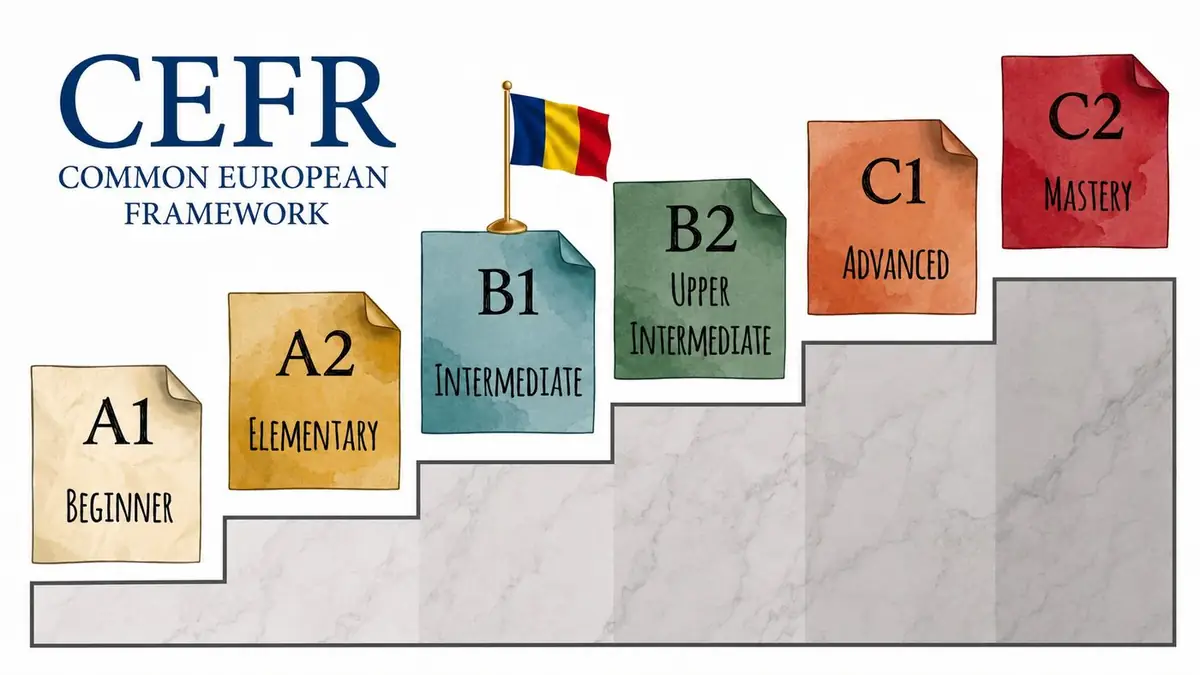
Law 14/2025 took effect on March 15, 2025. It introduced a B1-level Romanian language certificate requirement for citizenship applicants under Article 10 and Article 11, which covers most citizenship by descent cases.
Since then, Emergency Ordinance 16/2026 extended the deadline for affected applicants to submit their B1 proof to March 2027. That extension is real and it matters, but it's a deadline extension, not a repeal.
Two exemptions worth knowing: applicants who previously held Romanian citizenship themselves, and applicants who are 65 or older.
Say it plainly: this is a real requirement with a real deadline. It is not bureaucratic noise, and it is not going away because people find it inconvenient.
The Administrative Gray Zone: What If the Consulate Gave Different Guidance?
This is the question most people searching this topic actually need answered.
If you filed before March 15, 2025, you are likely exempt. Confirm that in writing with the consulate where you filed. Don't rely on a verbal answer.
If you filed after March 15, 2025, the legislation establishes the B1 requirement for your application and provides a transition period for submitting proof, so the statutory rule itself is not undefined. The uncertainty some applicants encountered, including the applicant above, came from inconsistent or delayed consular guidance about how that rule would be applied to their specific file, not because the law left the question open.
I won't promise anyone an outcome, because nobody honestly can. What I can tell you from working through this: the consulate where you file is not the final authority. The National Citizenship Authority in Bucharest is. What the consulate tells you matters, and how you document what they tell you matters even more. In the case above, we didn't just accept the consulate's answer and hope. We built a documented basis for his position, and separately prepared for the exam anyway, so the file is protected whichever way Bucharest reads it. That documentation strategy is one of the most valuable things I cover on a Roadmap Call, because it's the difference between hoping you're fine and having a written record if it's ever questioned.
The Exam Options, Briefly
If the requirement applies to you, there's more than one way to get the certificate: official language institutes that offer remote testing, and select Romanian universities that administer accredited exams.
They differ meaningfully on cost, availability, and how fast you can realistically get from deciding to take the exam to holding a result. I won't rank them here, because the right choice depends on your timeline and situation, and it's exactly the kind of thing I help clients sort out directly. One honest thing worth saying publicly: don't leave this until close to your deadline. Waiting has real, avoidable costs.
The Translator Problem, Which Is Different From Poland's
Romania has its own translator certification requirements, and they interact in a non-obvious way with geography. If you file at a consulate in a city where you don't live, or some of your documents originate in a different country than where you filed, the certification requirements for your translations get more complex than a purely local case. Nobody explains this clearly anywhere, and it usually only surfaces mid-process, when a consulate flags a document as insufficiently certified. It's fixable. It's much cheaper to avoid.
If You Just Found Out You Might Be Eligible
Three honest things, for the person reading this at 11pm wondering where they stand.
One: the B1 requirement is real, but there are paths through it, and whether it applies to you depends on when and how you file, or filed.
Two: if the exam applies to you, it's passable with focused preparation. It's a barrier to people who treat it as an afterthought, not to people who take it seriously. I've been deep in Romanian language preparation myself, so I can tell you firsthand the jump to B1 is very achievable with a real plan.
Three: the exam is not the first step. The first step is knowing whether your lineage actually qualifies under Article 10 or Article 11. Studying for an exam you don't need is wasted time. Not studying for one you do need is a real risk. Get the eligibility answer first.
That eligibility answer, your timing, and what you should be documenting right now is exactly what the Roadmap Call covers. 45 minutes, your specific situation, and an honest read on where you stand.
Take the 2-minute eligibility quiz