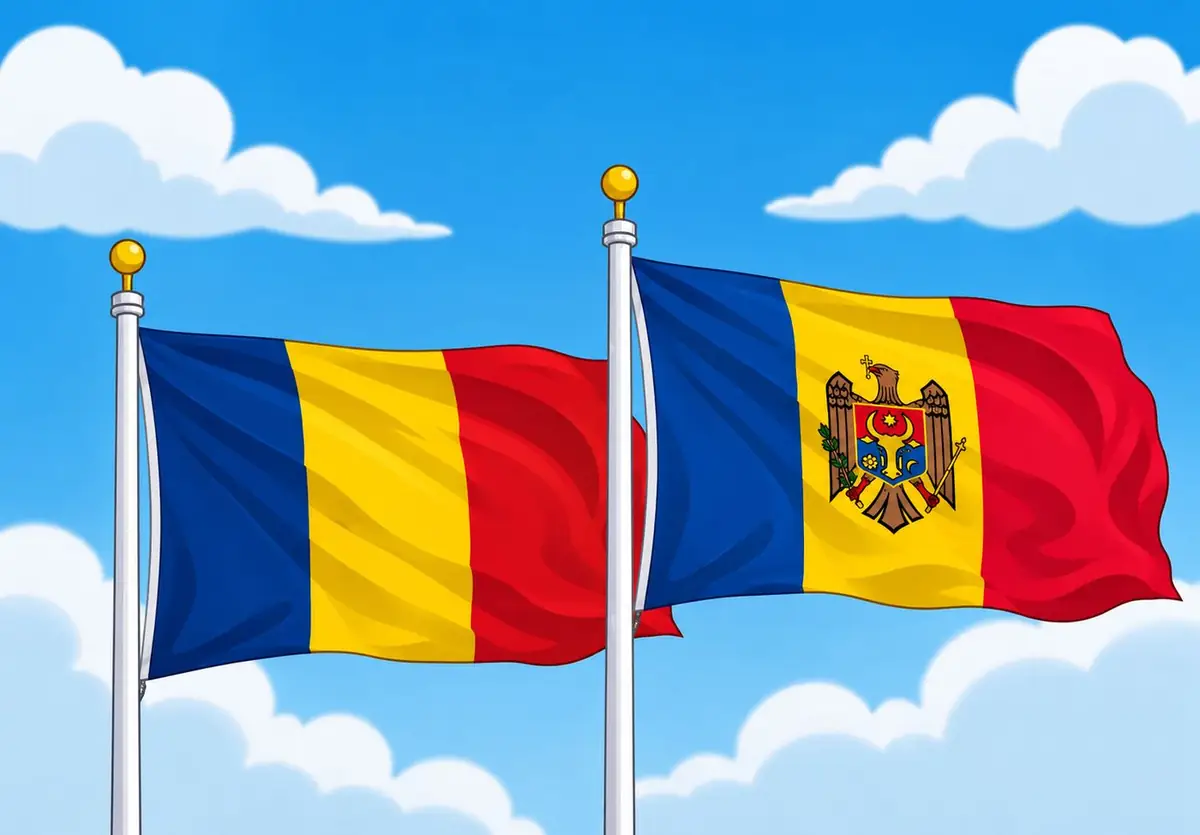
Have Moldovan Roots? You Might Already Qualify for Romanian Citizenship
The DNA Discovery People Can Make
On a personal note, I discovered that I had ancestors who lived in Moldova on my mother's side of the family once I took an AncestryDNA test. I had ancestors as far back as the early 1800s showing up in my results living in towns that exist today in the Republic of Moldova. My primary line, my great-grandfather, was actually born in Romania, and that's how I ended up eligible for Romanian citizenship myself. But others may discover something different in their own DNA results: an eligible ancestor born in Moldova, in a region that used to belong to Romania. That discovery may identify a Romanian citizenship route worth investigating. DNA results or ancestral geography do not establish eligibility by themselves.
Most People Don't Realize Moldova and Romania Share This History
Bessarabia, the region making up most of what is now the Republic of Moldova, was part of Greater Romania between 1918 and 1940. Many people with ancestors living there at the time held Romanian citizenship. After the Second World War, the Soviet Union absorbed the region into its own territory, and the people living there, through no fault of their own, lost that citizenship. As a result, Romania built a specific legal pathway for exactly this situation.
Article 11: The Part of Romanian Law Built Exactly for This
Certain descendants of former Romanian citizens from qualifying historical territories, including parts of Bessarabia and other regions that were part of Greater Romania in the interwar period, may have a route under Article 11. Great-grandchild-level cases may be possible. Citizenship status, dates, locality, circumstances of loss, and lineage still require documentary review before any of this becomes a real answer for a specific family.
Worth saying plainly, since this comes up: this has nothing to do with whether Romania and Moldova ever become one country again. That's a separate political question entirely. This citizenship pathway exists on its own, regardless of what happens with that conversation.
What to Actually Look For If This Might Be You
Have you taken a DNA test (AncestryDNA or 23andMe, for example), or do you know definitively from family history that you have a direct ancestor, a parent, grandparent, or great-grandparent, who was born in a town or region that's part of modern-day Moldova (Bessarabia), or modern-day Ukraine (Hertsa or northern Bukovina)? Do you know roughly when they were born, and whether that falls within or near the 1918 to 1940 window?
Tracing this kind of case can be more document-intensive than a straightforward Romanian case, since the records you need may sit in Moldovan, Romanian, or occasionally Ukrainian archives, depending on the exact location and how the borders shifted again after the Second World War. This is exactly where European Roots Consulting can bring real value, helping with the archival research, coordination, and genealogy involved, and getting the original documents into your hands even when that means navigating an active war zone, language barriers, underfunded government institutions, or damaged and lost records.
A Quick Word on the Romania-Moldova Unification Headlines, as of July 2026
Last updated: July 2026
You may have seen recent news that Romania's parliament took a step toward "unifying" with the Republic of Moldova. Worth being precise about what actually happened: Romania's lower house didn't vote in favor of it. The bill advanced only because nobody debated it before a procedural deadline expired, a technicality, not an endorsement. It still needs approval from the Romanian Senate, where the outcome is far from certain, and Romania's own government has issued a negative opinion on the proposal.
The Republic of Moldova hasn't taken any matching legislative step. That said, Moldovan President Maia Sandu did make real news of her own in January 2026, stating in an interview that if a referendum on unification were held, she would personally vote in favor of it. She was also clear in that same interview that joining the EU independently remains the more realistic path for Moldova right now, since current polling shows only about a third of Moldovans actually support unification itself.
So whatever happens with any of this, here's the actual takeaway: it changes nothing about the citizenship pathway described above. Article 11 doesn't need unification, a referendum, or any political outcome at all. It's already real, on its own, regardless of how that conversation unfolds, in either country.
Curious About Your Options?
Sometimes the best discovery is the one you least expected. DNA testing can surface useful clues, possible locations, and previously unknown relatives. It can point you toward records worth investigating, but it does not prove citizenship status or a legally qualifying family line. It could be as simple as a great-grandparent you knew nothing about, which is exactly what happened in my own family, for both Romania and Poland, that turns out to be the path to an EU passport.
If you have Moldovan ancestry, or family stories about a region you've never quite placed, or a DNA result naming towns you didn't recognize, it might be worth more than curiosity. The Roadmap Call is where that question actually gets answered. You can also take the quiz on this site if you'd rather start from scratch and see whether a Roadmap Call makes sense for you first.
Take the 2-minute eligibility quiz