Polish Citizenship by Descent for Canadians
Author: Zack, from European Roots Consulting
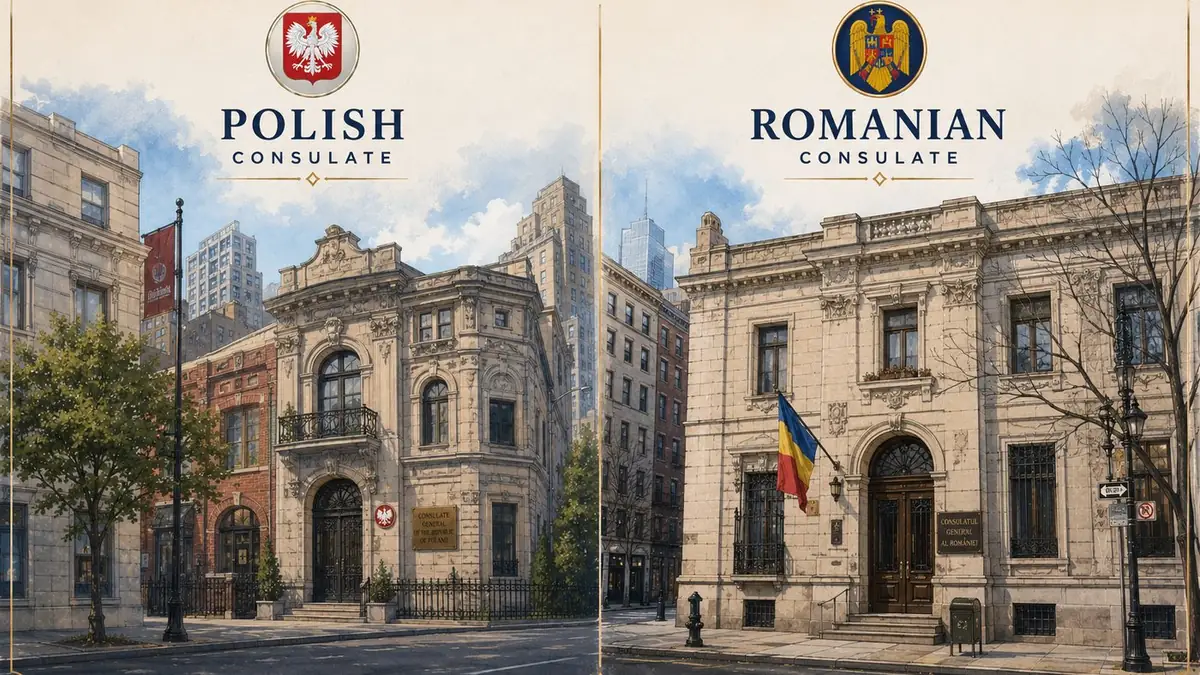
I'm from Toronto. When I filed for Polish citizenship, I filed at the consulate in my own city, with my brother and my father. Canadians have a real advantage in this process, and a few traps most of us don't see coming.
Where Canadians file
Poland has an embassy in Ottawa and consulates general in Montreal, Toronto and Vancouver. Polish consular guidance says you apply through the consular office responsible for your place of residence, the application must be completed in Polish, and foreign-language documents must be translated into Polish by a sworn translator or a consul. Requirements change, so check your consulate's own page before you plan anything. I also keep a list of Polish and Romanian consulates in the US and Canada.
Paying the consular fee
The same guidance says the fee is paid at the counter, in cash, by money order or by certified bank cheque made out to the specific office. Personal cheques are not accepted. Montreal and Toronto also accept debit and credit cards, and Toronto does not accept American Express. Confirm the current fee and payment methods with your consulate before you go.
Why Canadian records surprise people
Canada looks like the easy part. Often it isn't.
On my own file, one birth had to be formally registered with the province before a certificate could even be issued. A marriage turned out to be in a province no one in the family remembered. I had budgeted for "order a birth certificate." What I had was a search.
Canadian families also tend to carry immigration and naturalization records. A naturalization date can matter to the Polish analysis, which is why it is one of the first facts I review for any Canadian client. I covered what happened on my own file in what I'd do differently.
Translation is where Canadians overpay
Translation sounds simple. It isn't. The kind of translator Poland accepts, and where that translator needs to be based, depends on the document and its language. A document that came from a Canadian office and one that came from an archive in Eastern Europe do not follow the same route. Assume one translator handles everything and you may pay twice.
What it costs
Third-party costs, including translations, apostilles, records, couriers and government fees, run roughly $500 to $1,500 per case in my experience, and more for document-heavy files. My professional fee is flat and comes on top. The full breakdown is in the Polish cost guide.
Families filing together
If you are filing with siblings or a parent, each adult files a separate application. The research on the shared ancestor can often be done once. Adults after the first get 25% off Guided Process and Done For You, and applicants under 18 are free. More in filing as a family.
Where to start
If you are not sure your family line qualifies, the two-minute eligibility quiz will tell you. If you already know it does, the Roadmap Call lays out your Canadian and Polish documents in the right order. Not sure what to gather first? Start with the document checklist.
Approval is always at the discretion of the Polish authorities, and timelines run in years. This is general information, not legal advice.
Sources: Polish consular guidance for Canada on confirming citizenship.
Take the 2-minute eligibility quiz